After a first day filled with history and nature on the Bygdøy Peninsula, it was time to explore Oslo on foot—right in the heart of its vibrant city center. On this second day, we started with a peaceful stroll through the gardens of the Royal Palace, walked along the city’s most iconic avenue—Karl Johans gate—visited the central station area, and ended the day at the stunning Oslo Opera House by the fjord. It was a walk full of contrasts: from classic architecture to modern design, from the calm of green parks to the buzz of urban life.
If you haven’t read Day 1, where we cruised the fjord, explored open-air museums, and enjoyed delicious salmon for dinner, check it out here:
👉 From fjord to fork: Oslo’s best sights and salmon
1. Oslo’s Royal Palace – Slottsplassen
The Royal Palace of Oslo (Det Kongelige Slott) is one of Norway’s most iconic landmarks. Built in the 19th century, it serves as the official residence of the Norwegian monarch and is surrounded by beautiful gardens open to the public year-round.

The Royal Palace of Oslo, a symbol of Norwegian royalty and elegance.
Unfortunately, when we visited, the palace was closed to the public. It only opens for guided tours during the summer—from June 21 to August 17 in 2025. The tours include the reception rooms, the grand staircase, and the Throne Room, all led by professional guides.
Useful info for your visit:
– Opening season: Late June to mid-August, with fixed tour times daily.
– Ticket price: Around 230 NOK per adult (approximately €20)
– Tickets: Available online or at the entrance box office—but they sell out quickly.

One of the elegant statues hidden among the trees in Slottsparken.
Tip: Even if you’re not visiting inside, don’t miss a walk through the Palace Gardens (Slottsparken). This is one of the most scenic and centrally located parks in Oslo, featuring shaded benches, beautiful statues, and charming views.

Lush garden details from Oslo’s Royal Palace Park.
2. Karl Johans Gate – Oslo’s Main Street
After exploring the palace gardens, we followed Karl Johans gate, Oslo’s most famous boulevard. This lively street connects the Royal Palace to the Central Station and is lined with historic buildings, cafés, boutique shops, and plenty of urban life. It’s the perfect place for a relaxed stroll—people-watching, window shopping, or stopping for a strong Norwegian coffee.

Oslo’s most famous street, full of life and charm.
Along the way, we passed:
– The National Theater
– The Norwegian Parliament (Stortinget)
– Cozy bookshops and galleries
– Sidewalk cafés (prices are a bit high, but the atmosphere is worth it)

Walking down Karl Johans gate, Oslo’s vibrant urban heart.
Tip: If you’re looking for a spot to unwind, try Espresso House—a popular Scandinavian chain with free Wi-Fi, lactose-free options, and several convenient locations in Oslo.

A bronze cyclist stands quietly on Karl Johans gate — one of Oslo’s charming surprises.
3. Oslo National Theater – Culture and Architecture in the Open
One of the highlights of our walk down Karl Johans gate was stopping at the magnificent Oslo National Theater (Nationaltheatret). Inaugurated in 1899, this historic venue is a gem of neobaroque architecture and one of Norway’s most important stages. Even if you don’t go inside, the exterior alone—with its ornate façade—is worth admiring.

The impressive front of the National Theater, a true architectural gem in Oslo.
In front of the building, you’ll find a small square featuring statues of three towering figures in Norwegian literature:
– Henrik Ibsen, Norway’s most famous playwright, author of A Doll’s House and Peer Gynt
– Bjørnstjerne Bjørnson, poet, novelist, and writer of the national anthem
– Ludvig Holberg, known as the “father of Scandinavian comedy”
These statues bring a solemn yet proud air to the space, highlighting how deeply Norwegians value their cultural heritage. It’s a great spot for a photo or to relax on a bench before continuing your city walk.

Standing tall near the National Theater, this statue honors Henrik Wergeland, a key figure in Norway’s literary history.
Local tip: Even if you don’t plan to attend a performance, sometimes the theater’s interior is open to the public during the day—so take a peek inside if you can. And if you ever return to Oslo, catching a show here (even in Norwegian!) could be an unforgettable cultural experience.
4. Norwegian Parliament – Stortinget
Continuing our walk down Karl Johans gate, just after the National Theater, we reached one of Oslo’s most iconic and politically significant buildings: the Norwegian Parliament (Stortinget). Built in a Neo-Romanesque style and inaugurated in 1866, this yellow-ochre building is home to Norway’s legislative power.

The Stortinget — Norway’s striking Parliament building in the heart of Oslo.
What stands out immediately is the semi-circular shape of the main chamber, which is visible from the outside. Around the building, there’s always some activity—tourists snapping photos, school groups on guided tours, and sometimes even small peaceful demonstrations. This symbolic spot in the heart of the city reflects Norway’s democratic and open spirit.
Guided Tours of the Parliament
Stortinget is open for free guided tours on selected days throughout the year. In 2025, tours are available from June 30 to August 15.
Details:
When: Monday to Friday at 10:15 AM
Duration: Around 60 minutes
Language: English
Price: Free, but registration is required in advance
During the tour, you’ll get to see the hemicycle, the presidency hall, and even temporary exhibitions about Norwegian democracy, politics, and history.

Statue of Johan Sverdrup, Norway’s first prime minister, standing proudly near the Parliament.
Tip: If you’re short on time, just take a moment to relax in the park right in front of the Parliament. There are benches, green spaces, and a great view of the building—perfect for soaking in the surroundings and taking a break.
5. Oslo Cathedral – Oslo Domkirke
Before heading to the Central Station, it’s definitely worth taking a small detour to visit Oslo Cathedral (Oslo Domkirke). Located on a quiet square surrounded by shops and cafés, this 17th-century Lutheran church is one of Oslo’s most important religious sites.

Oslo Domkirke, a 17th-century church with history, charm, and a quiet atmosphere.
The church’s modest exterior hides a surprisingly beautiful interior, with painted ceilings, stained-glass windows, and a remarkable baroque organ.

A quiet and elegant interior — Oslo Cathedral’s altar and nave.
The Domkirke often hosts royal weddings, national ceremonies, and other significant religious events—highlighting its central role in Norwegian cultural life. Even if you’re not religious, the peaceful atmosphere and historical aura make it well worth a visit.
Visitor Info:
Admission: Free
Opening hours: Saturday to Thursday from 10 AM to 4 PM, Friday from 4 PM to midnight (may vary on holidays or during events)
Tip: Before you leave, take a moment to browse the Basarhallene—a charming circular gallery next to the cathedral with small artisan shops and a photogenic flower stall.
6. Lunch at Oslo Street Food – Global Flavors in the Heart of the City
After so much walking, we were more than ready for a delicious break—and we couldn’t have chosen a better spot than Oslo Street Food, located in the old Torggata Bad factory right in the city center. This vibrant indoor market is a paradise for food lovers, offering dozens of food stalls serving dishes from around the world: from Mexican tacos to Asian bao buns, Middle Eastern kebabs, healthy bowls, burgers, and Nordic specialties with a modern twist.
The atmosphere is laid-back and welcoming, with shared tables and a lively buzz all around. It’s a great spot to enjoy a full meal without breaking the bank—by Norwegian standards, of course. Dishes range from 100 to 160 NOK (around €8 to €13), with something for everyone, including vegetarian, gluten-free, and spicy options for those who like a bit of heat.

A bold and delicious gluten-free salmon bowl — fresh, filling, and full of flavor.
We sampled a fresh, gluten-free salmon bowl with bold seasoning, flavorful tacos, warm empanadas, nachos with homemade guacamole, and a classic schnitzel with crispy fries. A true festival of flavors!

A taco trio with something for everyone: chicken, pork, and veggie – one of the market’s best bites.
Tip: Arrive early (around noon) to beat the lines, especially on weekends. And be sure to leave room for dessert—there’s a dedicated corner for ice cream and modern takes on Scandinavian sweets.

Crispy, comforting, and perfect for sharing.
7. Oslo Central Station – Oslo S
Oslo Sentralstasjon (Oslo S) is Norway’s largest railway terminal and a major transport hub for travelers heading out by train or exploring the city’s surroundings.
Even if you’re not catching a train, it’s worth passing through just to experience the urban energy of this area. Nearby, you’ll find the Oslo City Shopping Mall, a local food market, and modern public art scattered around the square.

Oslo S — the city’s main gateway by rail.
Fun fact: Oslo S connects directly to Bjørvika, a new waterfront district that’s rapidly becoming the city’s cultural and commercial heart. It’s a striking example of Oslo’s transformation into a modern, forward-thinking capital.
8. The Oslo Tiger – An Unexpected Symbol
Right outside Oslo Central Station (Oslo S), it’s impossible to miss the massive bronze tiger sculpture. It’s one of the city’s most photographed landmarks and a popular meeting spot. The statue was a gift to the city in the year 2000, celebrating Oslo’s 1000th anniversary. It represents the city’s nickname, Tigerstaden—“the Tiger City.”

Oslo’s famous tiger — a bold symbol of the city’s identity.
The nickname originated from an 1870 poem describing Oslo as a wild, unforgiving place. But today, the tiger stands as a proud symbol of strength, creativity, and vibrant urban life.
Tip: Snap a photo with the tiger—it’s practically a rite of passage for visitors in Oslo!
9. Oslo Opera House – A Masterpiece by the Fjord
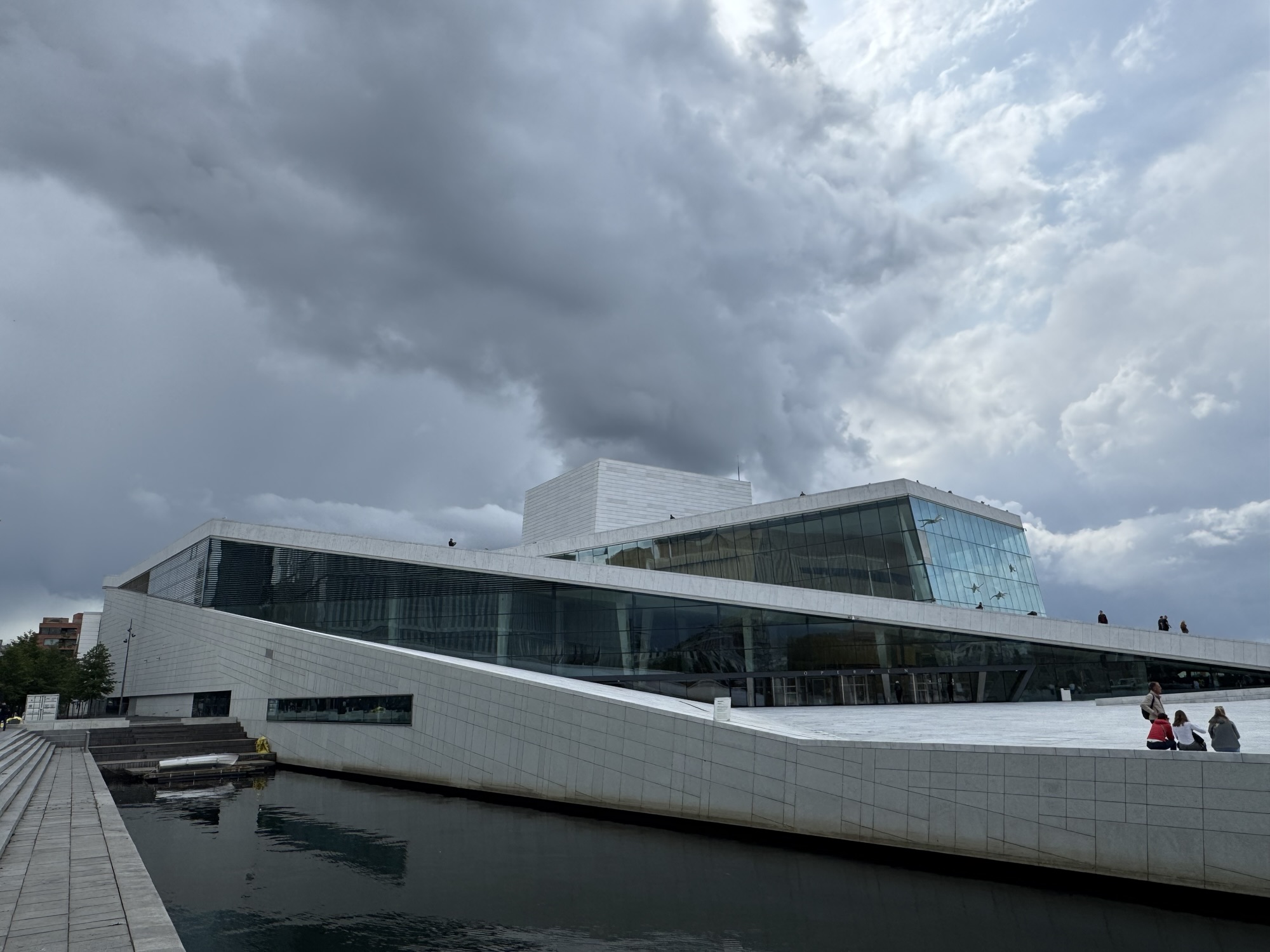
Next, we made our way to one of Oslo’s most impressive landmarks: the Oslo Opera House (Den Norske Opera & Ballett). Opened in 2008, this stunning example of modern architecture seems to rise directly from the fjord. Clad in white marble and glass, the building invites visitors to walk on its roof for sweeping panoramic views of the sea and city—and yes, it’s totally free.

The Oslo Opera House is not just for shows—walking on the roof is a must!
Useful info:
Entrance: Free access to the lobby, café, and shop
Show tickets: Starting from 200 NOK (about €17)
Open daily, and the exterior, including the rooftop, is accessible 24/7
Photo tip: Visit in the late afternoon for golden light reflecting off the water—perfect for architecture lovers and photographers alike.

From the Opera’s rooftop, you can spot the islands scattered across the Oslofjord—breathtaking!
10. MUNCH Museum – Modern Art with a Fjord View
If you love modern art or are curious about Edvard Munch, Norway’s most famous painter, don’t miss the new MUNCH Museum. Located in the Bjørvika district near the Opera House, this 13-story glass and steel tower is hard to miss—and offers far more than just The Scream.

The striking MUNCH Museum—home to much more than just The Scream!
Inside, you’ll find several versions of The Scream (yes, Munch painted more than one!), powerful self-portraits, moody landscapes, and lesser-known works that showcase the artist’s range. The first and most iconic version of The Scream is held at the National Museum, which we visited on our last day in Oslo.
The MUNCH Museum also features interactive spaces, a curated design shop, and a rooftop restaurant with breathtaking views of the fjord.
Visitor info:
Hours: Daily from 10 AM; closes at 6 PM (Sun–Tues) and 9 PM (Wed–Sat)
Admission: 220 NOK (~€19); free for visitors under 18
Tip: Visit near sunset and head up to the top-floor terrace for stunning views over Oslo
Even if you’re not a big museum-goer, this experience is worth it. The building itself is a work of art that perfectly reflects Oslo’s creative and modern vibe.
11. Barcode Project – Oslo’s Striking New Skyline
Just next to the Opera House and MUNCH Museum, you’ll find the Barcode Project—a collection of tall, narrow buildings with bold geometric designs that together resemble a giant barcode. Located in the Bjørvika district, this architectural marvel has completely transformed Oslo’s skyline and become a symbol of the city’s modernization.
Barcode combines residential buildings, offices, cafés, galleries, and cultural spaces. Walking through this area feels like stepping into a futuristic neighborhood—each building has a unique style, with mirrored facades, asymmetrical shapes, and daring angles. It’s a dream come true for fans of architecture and urban photography.

Reflections, angles, and patterns—every facade here tells a different story.
Tip: In the late afternoon, sunlight bounces off the glass surfaces, creating magical reflections. There are plenty of cafés and bars tucked between the buildings—ideal spots for a break while admiring this Scandinavian design wonderland.
12. Deichman Bjørvika – A Library of the Future
Right next to the Oslo Opera House and overlooking the fjord, the Deichman Bjørvika library is much more than just a place for books. Opened in 2020, this modern, light-filled building spans six floors and features reading areas, coworking spaces, a cinema, recording studios, and dedicated zones for kids. It’s a true cultural hub, free to enter and designed to inspire. Even if you’re not planning to read, it’s worth stepping inside—head to the upper floors for a fantastic view over the harbor.

Working or studying here? The view definitely helps!
13. Damstredet – A Charming Hideaway in the City
Still full of energy and looking for a cozy spot, we headed to Damstredet, a small cobbled street that feels like it’s straight out of a fairy tale. Located just north of the city center, near the Grünerløkka neighborhood, this 19th-century street is famous for its colorful wooden houses, flower-filled windows, and peaceful vibe. It’s one of those secret spots in Oslo that makes you forget you’re in a modern Nordic capital.

Damstredet looks like it came out of a storybook—pure Oslo magic.
Though short, Damstredet is packed with charm. It’s the perfect place for a slow walk, a few photos, or just admiring traditional Norwegian architecture. Many of the houses are still privately owned, and the area has a lovely neighborhood feel—with cats at the windows and bikes leaning against painted walls.
Tip: Pair your visit with a walk down nearby Telthusbakken, another adorable street with views over St. Hanshaugen Park. If you have more time, explore the quirky shops and creative cafés in the surrounding area.

Another fairytale street, full of life and local flair.
14. Mathallen Oslo – A Tasty Refuge on a Rainy Day
When the sky started to turn gray—and the rain rolled in, as it often does in Oslo—we looked for a cozy spot to take a break. That’s how we stumbled upon Mathallen Oslo, a covered food market that’s perfect for rainy days and full of delicious local experiences.
Located in the Vulkan district by the Akerselva River, this indoor food hall is home to dozens of stalls and small eateries offering both Norwegian specialties and international dishes. You’ll find everything from fresh oysters, artisanal cheeses, sourdough breads, and smoked meats to Asian plates, creative vegetarian options, and more. It’s all served in a modern, upbeat setting with communal tables and a relaxed crowd.

So many flavors, one vibrant indoor market!
Tip: The area around Mathallen is also worth exploring—filled with street art, modern cafés, and riverwalk paths. Even in the rain, it turned out to be a lovely moment of the day!
15. Vår Frelsers Cemetery – A Place of Silence and History
Right next to Mathallen Oslo, we took a short detour to Vår Frelsers Cemetery (Vår Frelsers gravlund), one of the oldest and most important cemeteries in the city. Surrounded by tall trees and peaceful walking paths, this cemetery holds great historical significance — several of Norway’s most iconic figures are buried here.
Among the most famous is Edvard Munch, the painter of The Scream. His grave is simple, yet frequently visited by admirers from around the world. You’ll also find the final resting places of writers, politicians, musicians, and scientists who helped shape Norwegian history.

Edvard Munch’s quiet final resting place.
Despite being a cemetery, the atmosphere feels more like a quiet park than a somber place. It’s a space where history is tangible, but there’s also a sense of calm and deep respect for the past.
Tip: Walk slowly and respectfully — many of the most notable graves are marked with informative signs in both Norwegian and English.
16. Dinner at Elias Mat & Sant – Traditional Norwegian Food with a Homemade Touch
To wrap up the day, we had dinner at Elias Mat & Sant, a cozy restaurant right in the heart of Oslo, near the university. Known for serving traditional Norwegian dishes made with seasonal and locally sourced ingredients, this spot offers a warm, welcoming atmosphere — the perfect place to unwind after a day of exploring.
Reservations are highly recommended, especially on weekends, as the restaurant is small and very popular among both locals and tourists. We were lucky to get a table, and it was absolutely worth the wait!
We ordered two delicious and very different dishes: a comforting Reindeer Stew, which brought back memories of the hearty meal we had in Finland (check out the post here), and a Baked Cusk (a North Atlantic fish), served with vegetables and mashed potatoes — I asked for the butter sauce on the side, and the dish was still light and full of flavor.

Traditional Reindeer Stew:
Hearty, rich, and comforting—just like the one we had in Finland!
One detail we truly appreciated: the menu clearly listed allergens for each dish, including gluten and lactose intolerance. It made the whole experience much more relaxed and accessible for those with dietary restrictions.

Baked Cusk with vegetables and mashed potatoes:
Fresh, light, and full of flavor
The food was fantastic — flavorful, well-portioned, and with that comforting, homemade quality that warms your soul. It’s an excellent choice if you want to try traditional dishes like cod, moose, or the catch of the day, without ending up in a touristy or overly formal restaurant.
That’s How Our Day Ended
After a full day of discovery — from royal gardens to modern neighborhoods, charming wooden houses to Munch’s masterpieces — we wrapped up with a delicious dinner and one last quiet walk through the streets of Oslo. We did a lot of walking, it’s true, but every step was worth it. We absolutely loved the city: it’s clean, beautiful, full of contrasts, and has a calm, welcoming energy.
Stay tuned — in our next post, we’ll share everything about Day 3, when we hopped on a boat and explored the islands of the Oslofjord. A perfect escape for nature lovers and fans of scenic views!
Final Tip for Exploring Oslo on Foot
If you enjoyed this walking tour and you’re looking for more urban adventures, check out:
– Two Days in Lisbon – Culture, food, and scenic viewpoints
– A Day in Sintra – Palaces, pastries, and magical trails
– A Perfect Day in Munich – Culture, history, beer, and gardens
Leave a Reply to 24-Hour Ticket, 3 Islands: A Perfect Summer Day in Oslo – Flight PantryCancel reply