After two busy days exploring the city — from museums and charming streets to delicious food — we decided to slow things down with something more peaceful: a boat trip to the fjord islands of Oslo. And it turned out to be one of the best decisions of our whole trip!
This was our third day in Oslo, and the idea of escaping the city’s pace to discover a greener, quieter side felt irresistible. If you haven’t read our first two days yet, check them out here:
• Day 1: Boats, open-air museums and delicious salmon
• Day 2: Royal Palace, Karl Johans gate, and Munch Museum
1. How to Reach Oslo’s Fjord Islands
To explore the islands, we bought a 24-hour ticket through the official Ruter app, which covers all public transport in Oslo — including ferries! That means you don’t need to pay extra for this mini fjord cruise.
Ticket Prices and Practical Info
The 24-hour public transport ticket, which includes ferries to the islands, is great value and easy to buy through the Ruter app. Prices (as of 2025) are:
• Adults: 132 NOK (approx. €11.30)
• Seniors (67+): 67 NOK (approx. €5.75)
• Children (ages 6–17): 67 NOK (approx. €5.75)
• Children under 6: Free
One ticket covers unlimited travel by bus, tram, metro, and ferry — perfect for a full day of exploring Oslo and its beautiful fjord islands.
The boats depart from Aker Brygge, right in the city center, and run regular routes between several islands throughout the summer. The views along the way are already worth the ride: Oslo fading into the distance, glistening water all around, and green islands appearing one by one like quiet little worlds.

The Oslo fjord at its most atmospheric — fortress, sailboat and sky in perfect harmony
2. First Stop: Hovedøya – History and Nature in Harmony
Our first stop was Hovedøya, one of the closest and most fascinating islands. It has a long and rich history — in fact, Cistercian monks settled here during the Middle Ages, and you can still explore the remarkably well-preserved ruins of a monastery built in 1147. The crumbling arches and mossy stones give the place a magical atmosphere, surrounded by wild greenery.

Living history surrounded by nature — Cistercian ruins on Hovedøya
But Hovedøya is more than history. There are forest trails, open grassy areas perfect for picnics, and even small beaches where you can swim. The mix of nature and heritage makes it ideal for anyone looking to slow down and soak in the scenery. We wandered through the woods, explored the ruins, and found the perfect shady spot to sit and enjoy the peaceful vibe.

A quiet walk through the woods on Hovedøya island
Before moving on to the next island, we had a lovely lunch at Klosterkroa Café, right next to the monastery ruins. This simple, cozy café has a charming outdoor terrace surrounded by nature — the perfect setting for a relaxed meal.
We ordered a Caesar salad with grilled chicken and crispy bacon, topped with crunchy croutons, and a plate of linguine alle vongole, full of tender clams, garlic and olive oil — light, summery, and flavorful.

A touch of Italy on a Norwegian island

Fresh and full of flavor — our Caesar salad at Klosterkroa
We also had some creamy hummus with rustic bread and a Wiener sausage served in lompe, the traditional Norwegian soft potato flatbread. A simple yet unforgettable lunch, full of flavor and freshness.

Simple and delicious: hummus with bread

A classic Norwegian snack — sausage in lompe with mustard and crispy onions
3. Gressholmen: Wild Calm and Hidden Paths
Next, we stopped at Gressholmen, which welcomed us with a much wilder, more secluded atmosphere. This island is less visited by tourists and ideal for those who love raw, untamed nature. There are no ruins or monuments here — just leafy trails, rocky inlets, and the kind of deep silence that clears your mind.

Tranquility on the fjord — peaceful island life just minutes from Oslo
Interestingly, Gressholmen was once Oslo’s first airport in the early 20th century, used for seaplanes that took off directly from the water. Today, there are no planes — only peaceful walking paths. We strolled along dirt tracks, listened to the sound of the waves, and found hidden corners where we could sit in total calm. It’s the perfect place to disconnect — both mentally and digitally.
4. Nakkholmen: Our Favorite Island
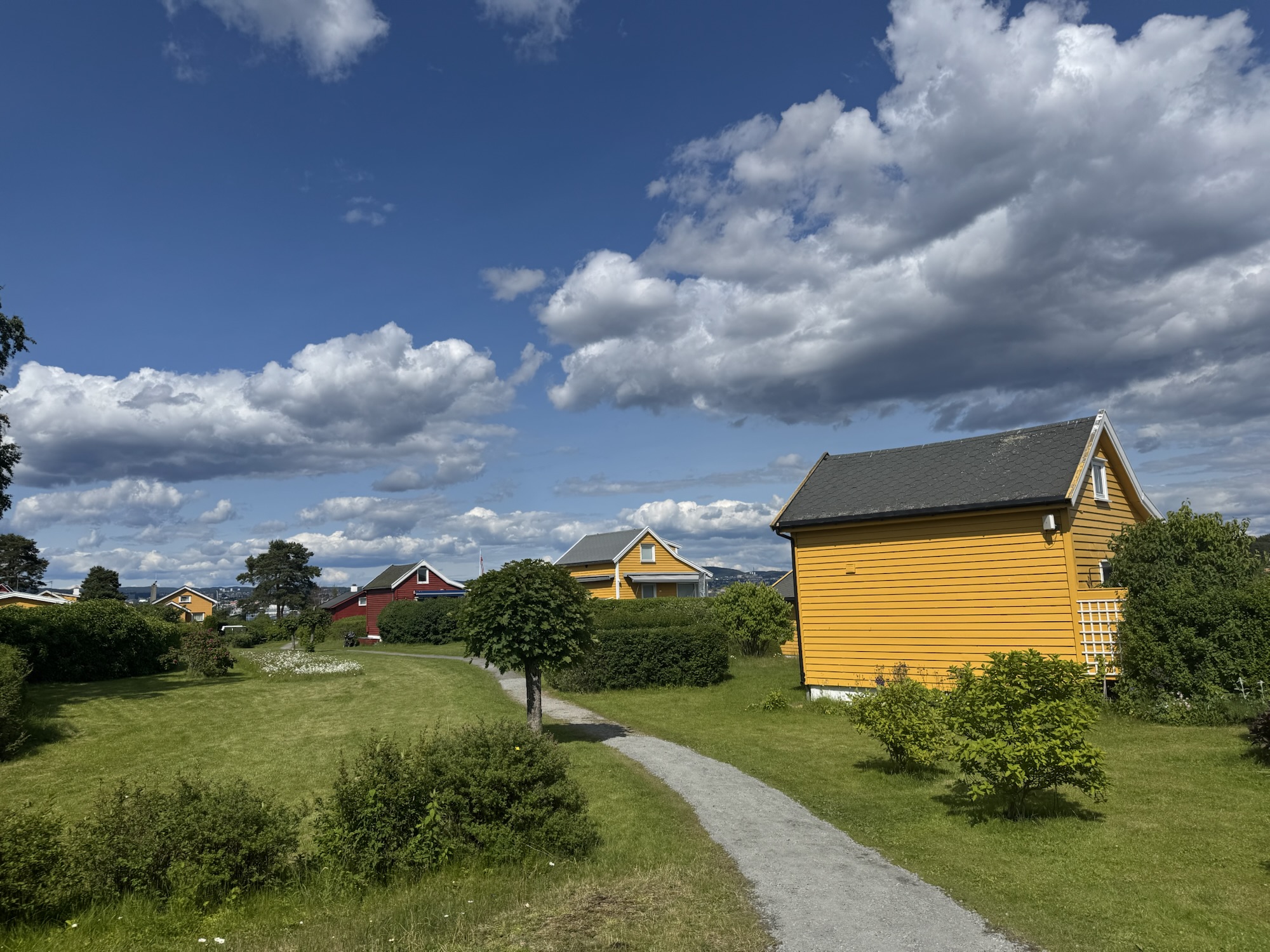
Our final stop was also our favorite: Nakkholmen. This small island has a unique charm — perhaps thanks to the rows of colorful wooden summer cabins lining its little paths, like a miniature village by the sea. Many of these cottages have been in Norwegian families for generations and are only used during the warmer months.

Nakkholmen — a charming little summer village in Oslo’s fjord
There are no typical tourist sights here — the island itself is the attraction. It felt like stepping into a slower world. We sat on a rock facing the fjord and watched boats go by, with the city skyline quietly resting in the distance. The contrast between the stillness of Nakkholmen and the buzz of Oslo made this moment feel extra special. Honestly, we didn’t want to leave — and we’re already dreaming of coming back for a whole summer.

Dreamy fjord view from Nakkholmen — peaceful, quiet, and unforgettable
5. A Sweet Break at Papabuene
After our relaxing island adventure, we weren’t quite ready to head back indoors. So we made one more stop — for a well-deserved ice cream and a drink at Papabuene, a cozy waterfront spot along Aker Brygge. The sun was still out, the sailboats were gliding across the fjord, and the atmosphere was pure summer. We found a table with a perfect view, enjoyed two scoops of ice cream and a cold drink, and let the calm, end-of-day vibe sink in. It was the perfect way to wrap up the island-hopping adventure before heading off to dinner.

End-of-day treat at Papabuene — ice cream, fjord views and summer vibes in Oslo

Late afternoon vibes at Papabuene — sun, sea breeze and the perfect waterfront pause in Oslo
6. A Late Afternoon Walk at Akershus Fortress
Before heading to dinner, we still had time (and energy!) for one last stop: a walk up to Akershus Fortress, the medieval castle that rises above the Oslo waterfront. Built in the late 13th century, this fortress has protected the city for centuries — from sieges, invaders, and even Nazi occupation during World War II. Today, it’s open to everyone, and walking through its gates feels like stepping into a quiet chapter of Norway’s past.

A quiet afternoon at Akershus Fortress — history, stone walls and a peaceful view over the Oslo waterfront
The sky was overcast and the light was soft, adding a certain mystery to the stone walls and quiet courtyards. We wandered along the cobbled paths, passed by arched gateways and old towers, and took in the panoramic views over the harbor and the fjord. From the ramparts, we could even spot the islands we had explored earlier in the day — now distant and peaceful on the water.
It was a quiet and reflective end to our afternoon, a calm and meaningful moment that connected the natural beauty of the fjord with Oslo’s rich history.

Moody fjord views from Akershus Fortress — where history meets the horizon
7. Dinner at Lorry – A Cozy Classic in Oslo
Back in the city, we ended the day with dinner at Lorry Restaurant, one of Oslo’s oldest and most atmospheric places. Located near the Royal Palace, this historic restaurant is known for its bohemian vibe, quirky vintage decor and cozy dining rooms filled with character — it’s like dining in a quirky museum.
The menu offers hearty Norwegian and international classics. We ordered two very different main courses: the Wallenbergare of the Sea, a light, buttery fish dish served with creamy sides, and the Reindeer Patties, rich and comforting with mashed potatoes and gravy — full-on Nordic comfort food.

A comforting Nordic classic — creamy Wallenbergare of the Sea at Lorry

Hearty and traditional — reindeer patties with gravy and lingonberries at Lorry
For dessert, we couldn’t resist sharing the house specialties: the layered Lorry’s Ice Cream Dessert and two bright, sweet Lemon Meringue Tartlets. A delightful way to end an unforgettable day.

A zesty lemon meringue tartlet beautifully plated with fresh mint and berries — dessert time at Lorry, Oslo
A Must-Do Summer Experience in Oslo
This day out on the fjord islands was a literal and emotional breath of fresh air. It revealed a softer side of Oslo that many visitors overlook: greener, calmer, and deeply connected to nature. If you’re visiting in summer, don’t miss this experience — it’s the perfect way to slow down and enjoy the season.
If you go, bring a snack, a swimsuit and a picnic blanket — and prepare for a day you’ll never forget.
Until Next Time, Oslo!
Our mini vacation in Oslo was simply amazing — the perfect mix of nature, culture, delicious food, and surprising moments. We loved every bit of it and we’re definitely coming back someday.
And it’s not quite over… a fourth post is coming, because on our last morning before flying home, we visited the brand-new National Museum of Oslo. There, we were lucky enough to see one of the original versions of “The Scream” by Edvard Munch — a truly unforgettable way to wrap up our trip. Our flight wasn’t until later in the day, so we got to enjoy a little more of Oslo before saying goodbye.
More Posts You Might Like:
• 🇳🇴 Day 1 in Oslo – Boats and Open-Air Museums
• 🇳🇴 Day 2 in Oslo – From the Royal Palace to the Munch Museum
• 🇵🇹 Lisbon – 2 Days of Food, History, and Miradouros
• 🇵🇹 Sintra – Palaces, Pastries and Magic
• 🇩🇪 Munich – Beer Gardens, Parks, and Bavarian Charm
Leave a Reply